



Itinerary
- Arrive Riyadh by flight _____ at ____ hours and transfer to Radisson Blu hotel.
- Overnight at the hotel.
- Breakfast at the hotel.
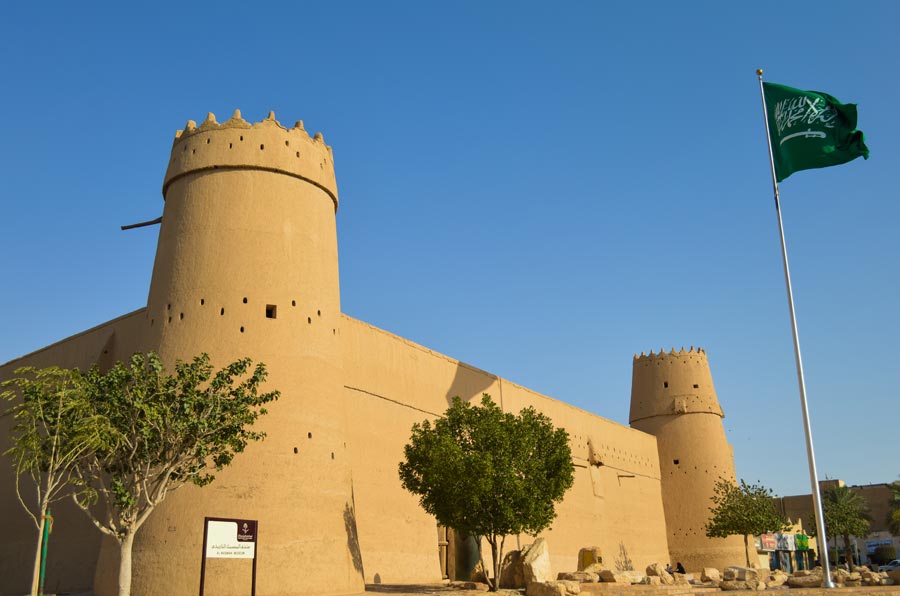
- Visit Masmak Fort, Dira Souq etc.
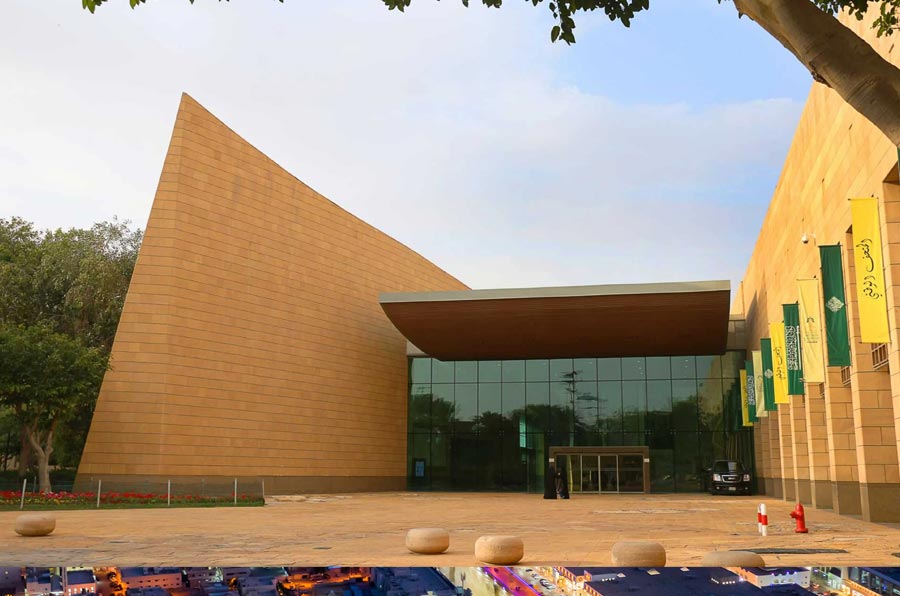
- Visit King Abdulaziz Historical Center (National Museum).
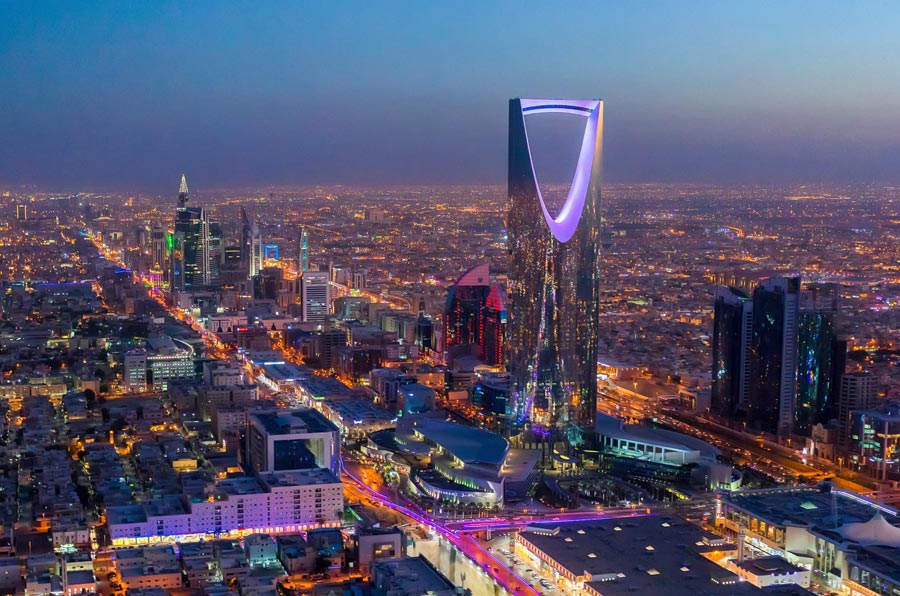
- Visit Kingdom Tower and Sky Bridge for a panoramic view of Riyadh city as well as shopping in the Kingdom Center.
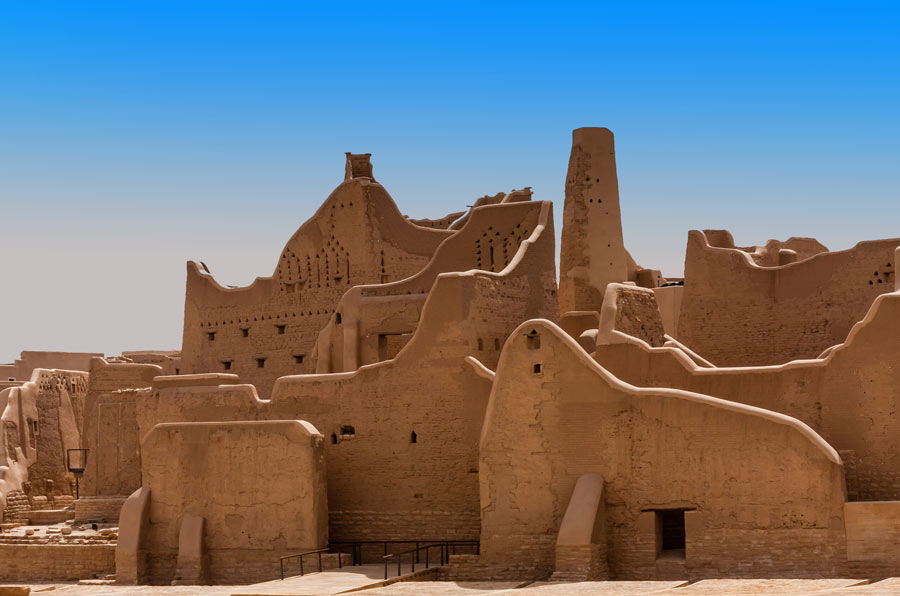
- Visit UNESCO Heritage site of historical Diriyah.
- Overnight at hotel.
The Masmak Fort is one of the most important monuments in Saudi Arabia from where the modern Saudi History begins. It is an important historic landmark in the city of Riyadh. This palace was built during the reign of Abdullah bin Faisal bin Turki Al Saud in 1865. The reason for building this historic palace was to serve as military garrison for the Abdullah bin Rashid army who was operating under a Governor in Riyadh from the Hail. His Majesty King Abdulaziz on 15th January 1902 captured the fort.
Dira Souq is famous for its variety of old copper and brass objects including silver daggers, silver Beduins Jewelry and dresses. While entering from main access, one always smells sandal wood fragrance. Dira Souq is worth buying antique carpets and other useful Saudi heritage antiques
The National Museum, which opened in Riyadh in 1999 to celebrate the centenary of Saudi unification, was the result of an international design competition. The primary custodian of the Saudi national heritage and culture, the Museum is a place of learning and discovery, designed to sing out with quiet excitement and inspiration, to kindle pride in the Arab heritage and reverence for Islam. This national Landmark is composed of eight galleries telling the complete story of Arabian History from the creation of the universe to our modern era.
The UNESCO Heritage site of historical Diriyyah is located about 20km from the main city center of Riyadh. It is one of the most important archaeological sites from where the history of Saudi Dynasty begins. It is situated in the Eastern part of the so-called Najd area in the valley known as Wadi Hanifa. The meaning of Najd is the high plateau, which forms the central part of Saudi Arabia. It is recorded by the chronicles that one of the person known as Ibn Dir, who was also the Chief of al-Dir clan of Duru, which was belonging to Bani Hanifa tribe, was ruling this area. He had a vast fertile land in the valley, which he was not able to utilize completely due to lack of thin population of his clan. Therefore, he invited another clan of the same Bani Hanifa tribe to settle down on the fertile area of the Hanifa valley. Therefore, the clan named Murdah comes under the leadership of Mani al-Muraydi in 1446 A.D in Wadi Hanifa. Ibn Dir gave land for the cultivation to the clan in the Wadi Hanifa and the clan settled down. They were the ancestors of the Al-Saud family who established their first rule at Diriyyah.
- Breakfast at the hotel.
- Transfer to the airport for your flight _______ AT _____ to Al Ula.
- Arrive at Al Ula and transfer to the Sahary Resort.
- Afternoon visit to Elephant Rock and highest point of Al Ula for Sunset view followed by walking through old city.
- Dinner and overnight at the resort.
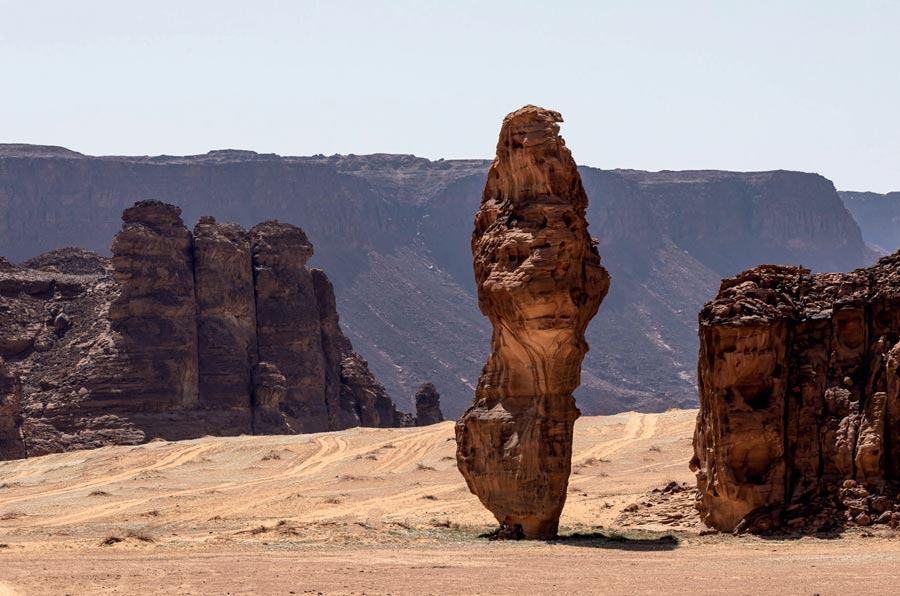
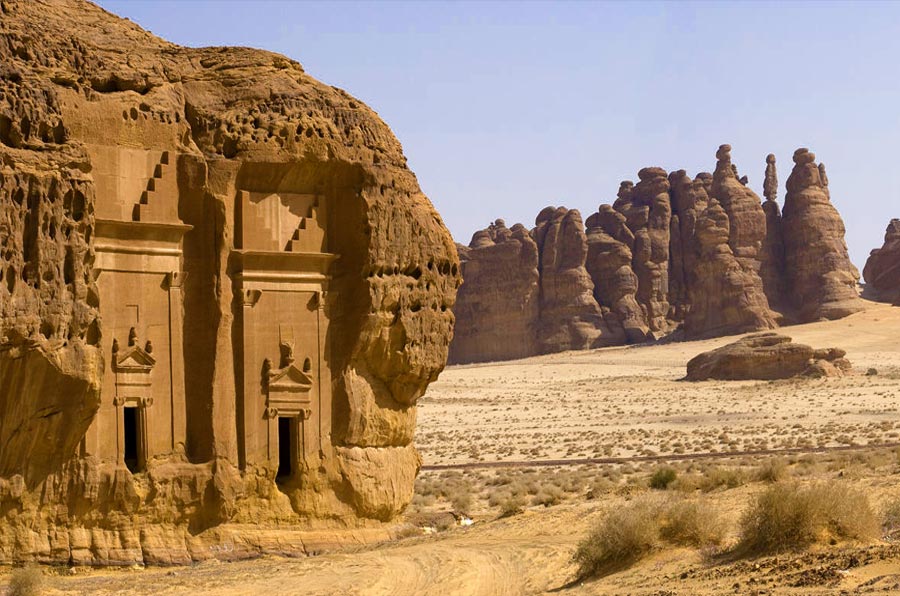
Wadi Al Ula, gateway to Madain Saleh (UNESCO Heritage site) is known for its Lion of the Lihyanites-predecessors of the Nabateans (100 to 500 BC). Madain Saleh is the prime tourist attraction of the Kingdom. It was known as “Al Hijr” in the ancient times and served as a stopover on a very prosperous trade route. The cities lie on 9 square Km in an area of isolation about 845 Km from Jeddah in the northwestern part of Saudi Arabia between Tabuk and Madinah. Once a bustling civilization, these 800 tightly packed mud-houses — parts of which are more than 2,000 years old — are now abandoned ruins, decaying in the hot desert sun. The walled city of Al Ula was founded in 6th century BC, an oasis in the desert valley, with fertile soil and plenty of water.
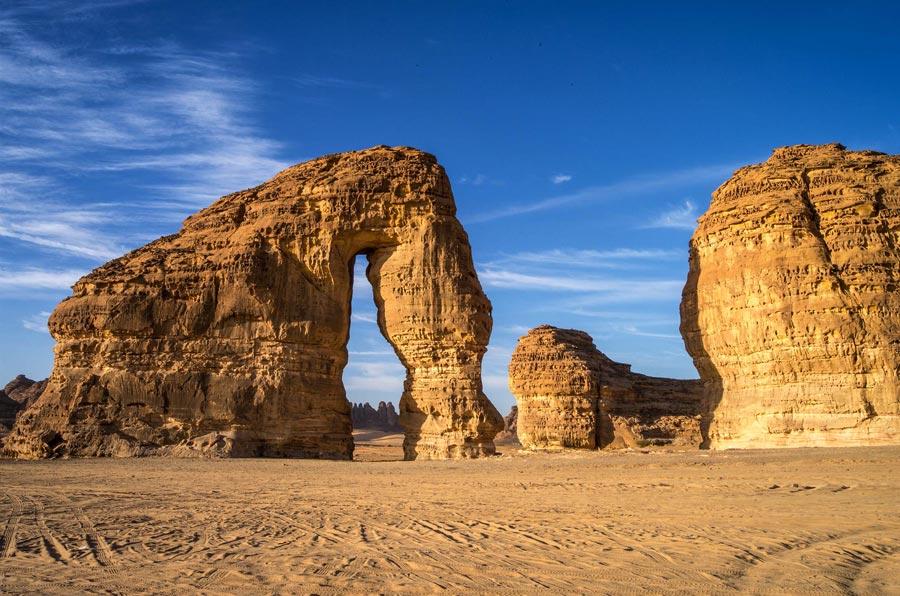
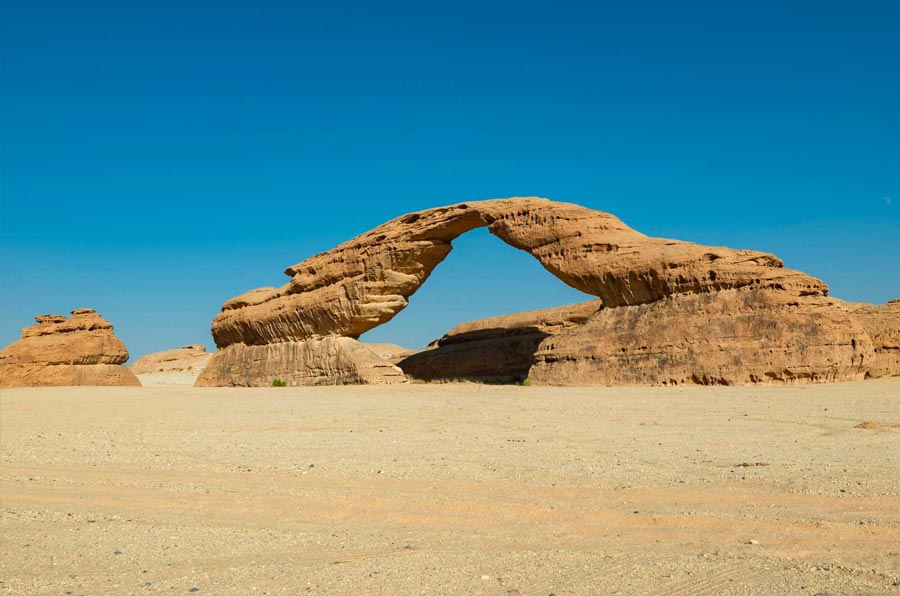
Elephant Rock is an amazing geomorphological wonder located 11km northeast of AlUla. A spectacular example of natural erosive forces of water and wind over a period of millions of years, this natural wonder rises 171ft from ground level with mountains looming in the background.
- Breakfast at the hotel.
- Morning visit Dadan/Jabal Ikmah sites.
- Afternoon visit UNESCO heritage site of Hegra visiting Nabatean Well, Qasr Al Bint, Diwan, and Al Farid Palace.
- Visit Desert by 4x4 for Rainbow Rock etc.
- Dinner and overnight at the resort.
Amongst the most significant discoveries in all of AlUla is the city of Dadan, the capital of the Dadan and Lihyan kingdoms. The city, which was built meticulously from stone and astride the valley’s oasis, dates back between the late 9th and early 8th century BCE (Kingdom of Dadan) and 5th–2nd century BCE (Kingdom of Lihyan).
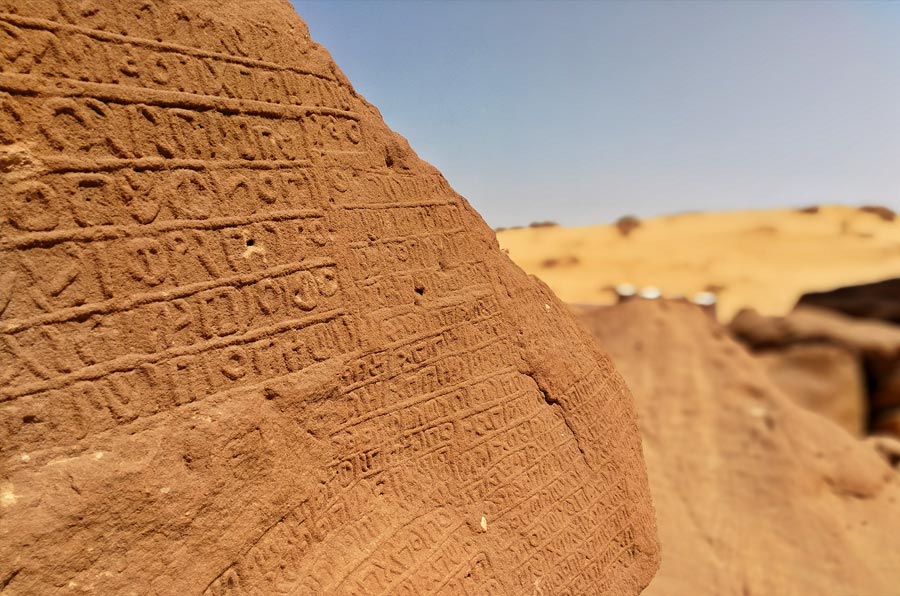
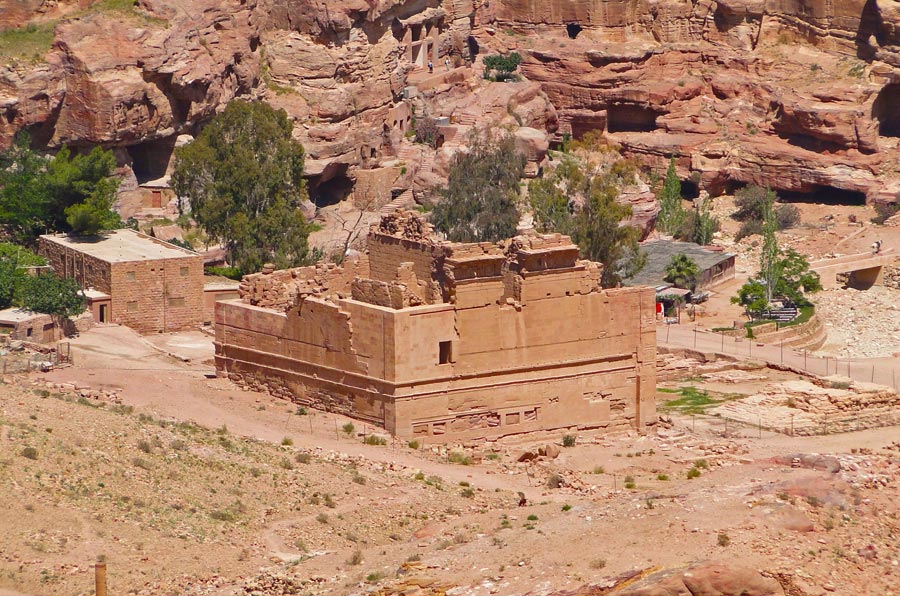
Qasr Bint means “Palace of Daughters”. This is the largest tomb at Madain Saleh sites. It is raised above ground level about 16 Meters. An inscription plaque is indicated on the doorway.
- Breakfast at the hotel.
- Morning drive to Madinah (380 Kms)
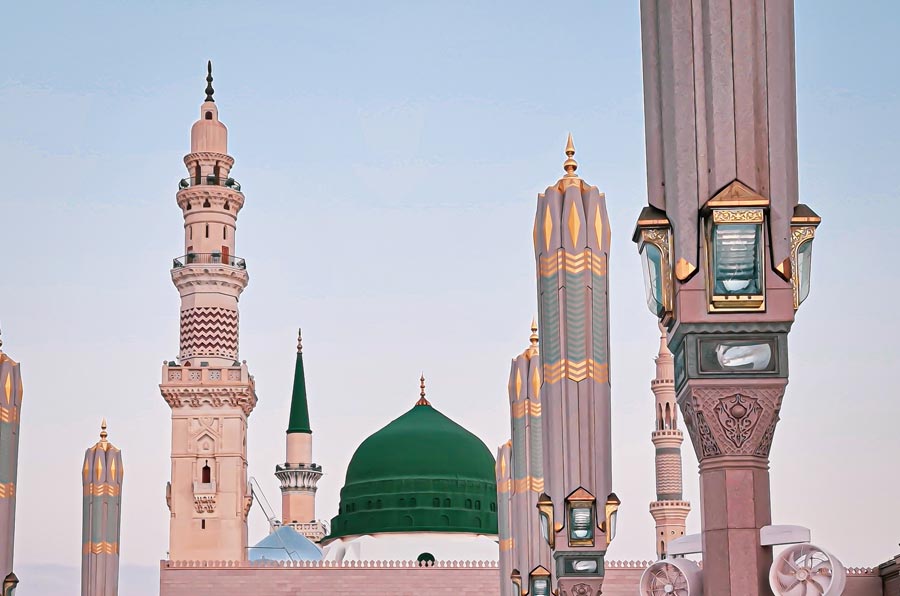
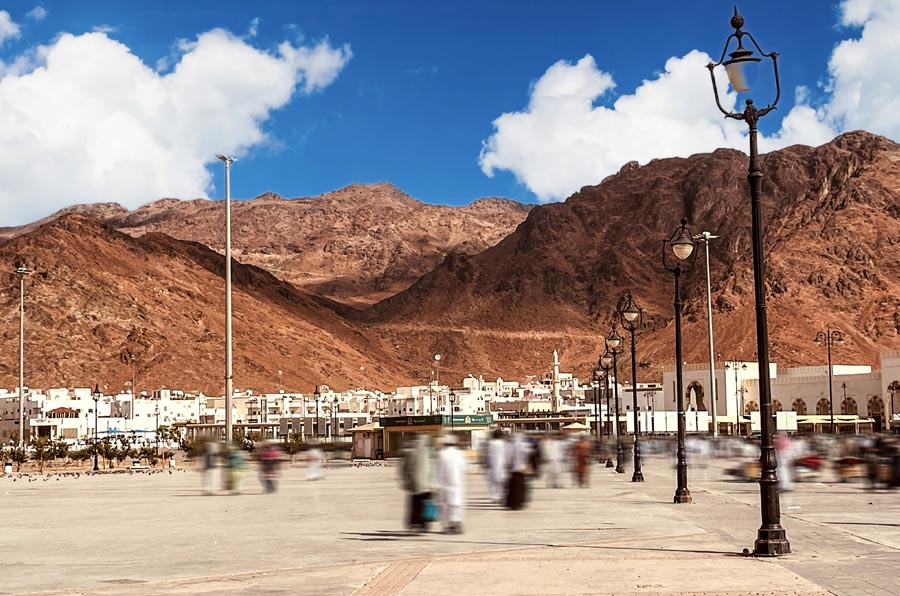
- Arrive Madinah and proceed for visit to Holy Mosque, Museum, Uhud Mountain etc.
- Evening transfer to Train Station for fast train at ______ to Jeddah.
- Arrive Jeddah and transfer to Blue Diamond Hotel for overnight.
- Breakfast at the hotel.
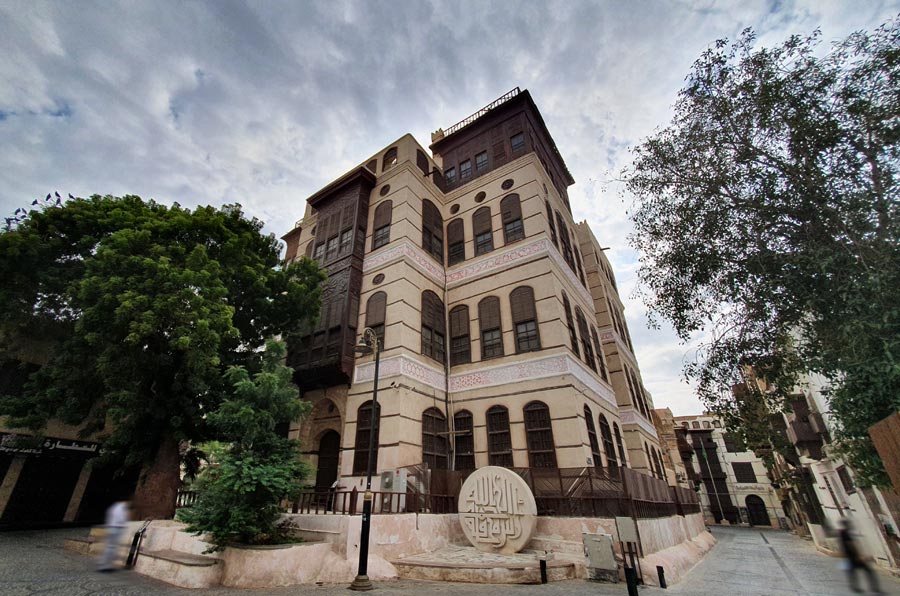
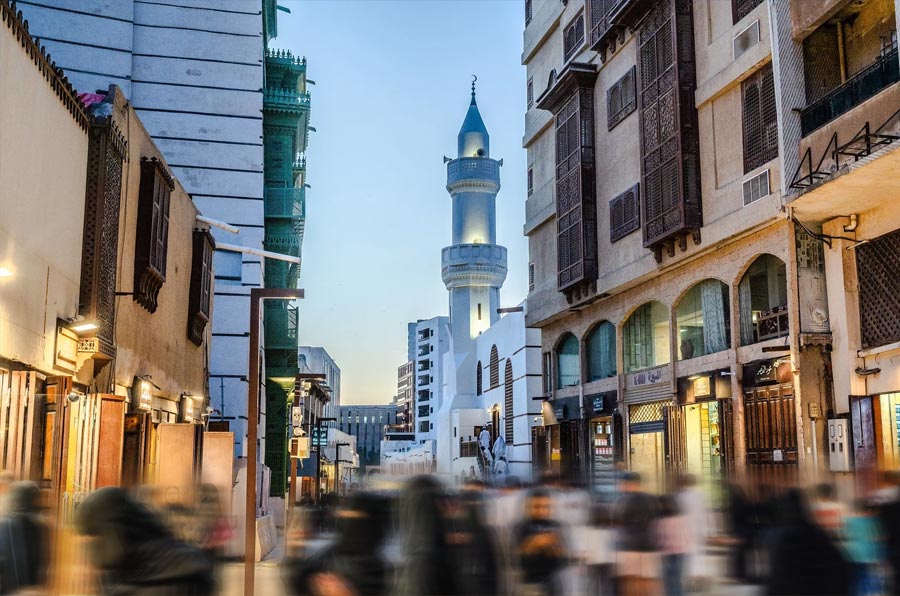
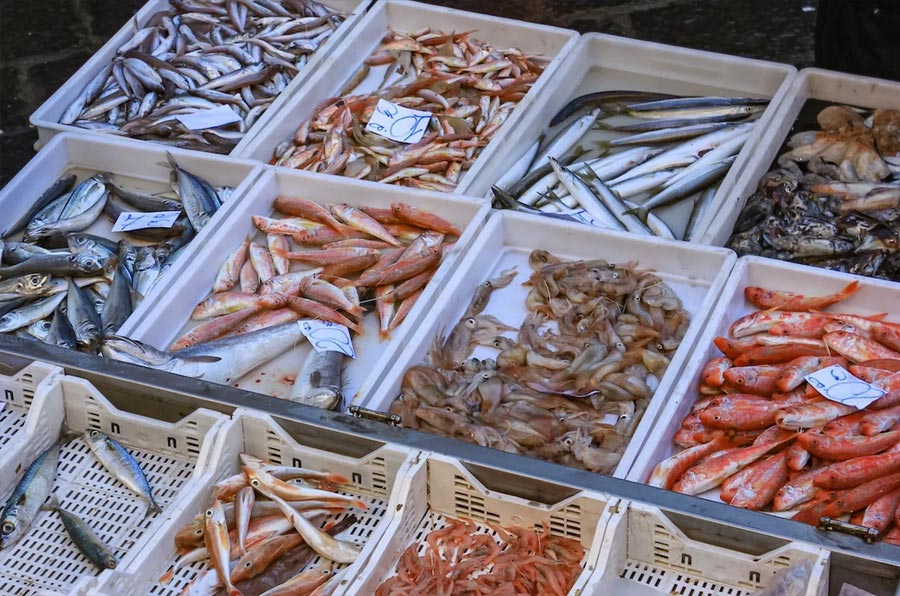
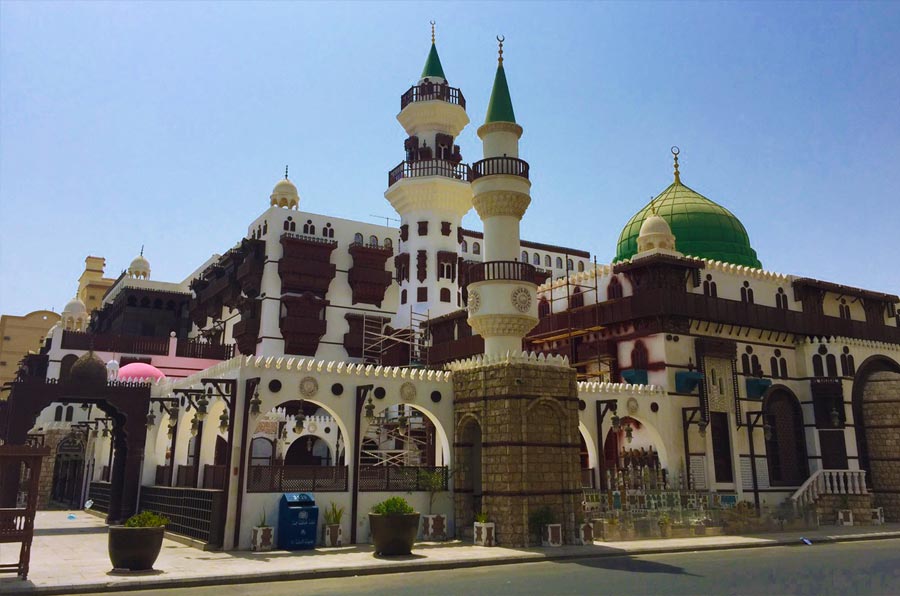
- A morning visit to Visit UNESCO Heritage site of Hijaz Construction's historical houses, Nasif House, Matbouli House, Alawi Souq, Fish Market etc.
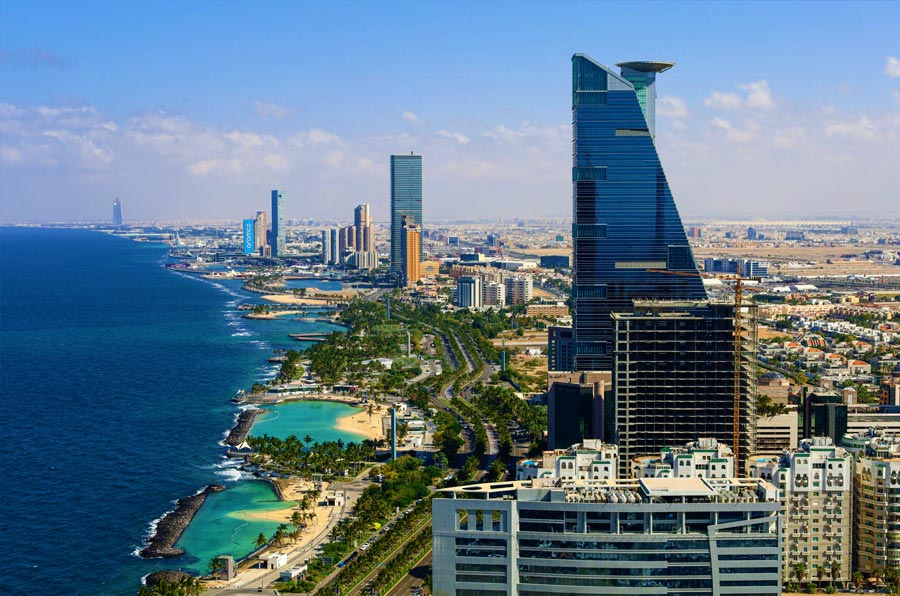
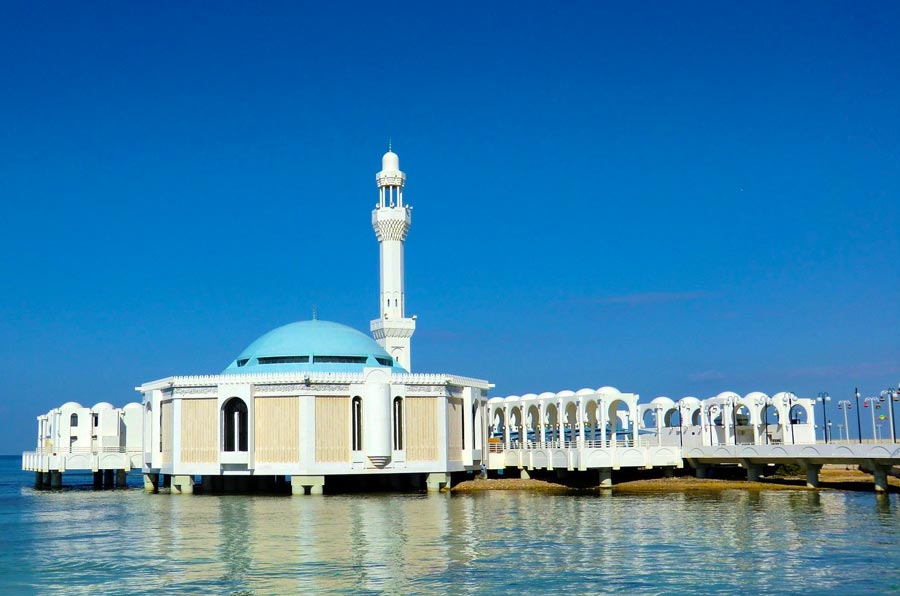
- Afternoon visit Abdul Rauf Khalil Art Museum, Corniche Area, Floating Mosque etc.
- Overnight at the hotel.
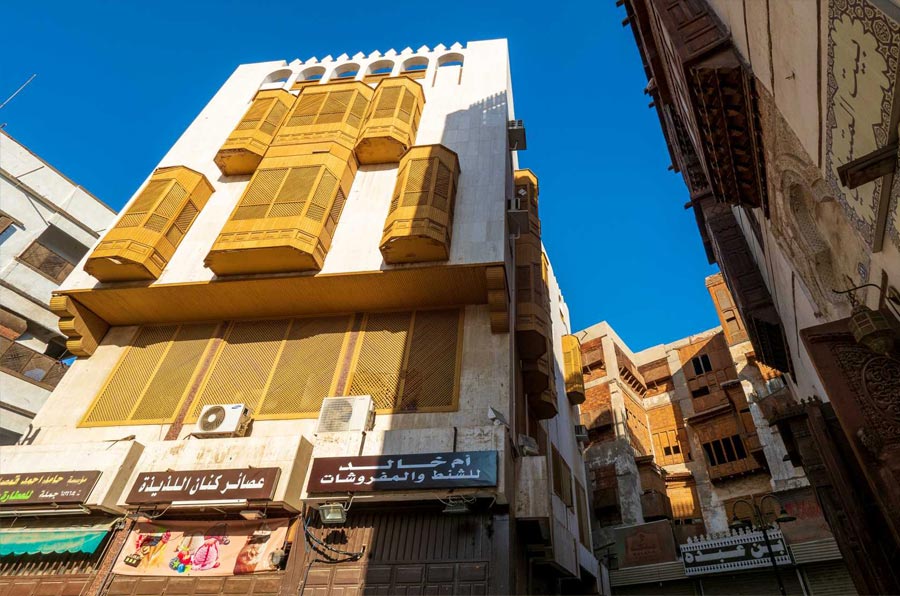
Historical Houses (UNESCO Heritage site) were constructed from coral and reinforced with wood so that beams crisscross the interior walls. Wooden balconies and casement windows are a special feature of Jeddah's style, with elaborated casement decorating the facades of the old houses - normally there is a small balcony fronting every window. Doors and windows shutters are intricately carved. Some are painted and some remain simply wood with varnish.
The Nasif House was built during the 1850s by the well-known Nasif Family, one of the most influential trading families in the long history of Jeddah. In the 19th and early 20th centuries the house was one of the most important buildings in Jeddah. It was here that King Abdul Aziz spent his first night in Jeddah, as the guest of Mohammed Nasif, after he lead his victorious army into the capital of the Western Province. The Municipality of Jeddah recognized the architectural and historic value of the house and in 1964 it was converted into a museum and put under Government care.
Abdul Rauf Khalil Art Museum consists of the main buildings, the mosque, the façade of the castle and the home of the Saudi Arabian heritage as well as the home of the Islamic heritage, the home of the World Heritage, exhibit heritage overall. This museum is worth visiting.
The Corniche of Jeddah is one of the most important attractions for visitors to Jeddah. As Jeddah's Red Sea coast extends for more than 80 km, the Municipality has made use of this long expanse of waterfront and turned it into place of fresh air for the city.
- Transfer to the airport for your departure flight.